Specialty Floor Maintenance for Commercial Properties
Commercial floor care Arizona properties need starts with understanding that different flooring types each require their own maintenance approach, and using the wrong method on the wrong material is one of the more expensive mistakes a property can make. This must match the specific materials installed throughout each building, not a single generic cleaning routine applied everywhere. This guide covers what proper specialty floor maintenance involves, material by material, along with the Arizona-specific factors that change how often each one needs attention.
Why Floor Care Has to Match the Material
Vinyl composition tile (VCT), natural stone, concrete, and carpet each respond differently to cleaning chemicals, foot traffic, and moisture, which is the core reason commercial floor care Arizona buildings need can’t follow one universal routine. A cleaning product that’s safe on sealed concrete can etch natural stone. A wax buildup process appropriate for VCT does nothing useful on polished concrete and can make it slippery. Using the wrong approach doesn’t just look bad, it can void a manufacturer’s warranty on the flooring material itself.
Understanding exactly what’s installed throughout a building is the first real step toward getting maintenance right, and it’s worth confirming rather than assuming, since many commercial buildings mix several flooring types across different areas. Affiliated Building Maintenance has developed material-specific expertise across the full range of commercial flooring since 1996, which shapes how we schedule and staff every account, not just how we clean on a given visit.
Floor Stripping and Waxing for Vinyl Composition Tile
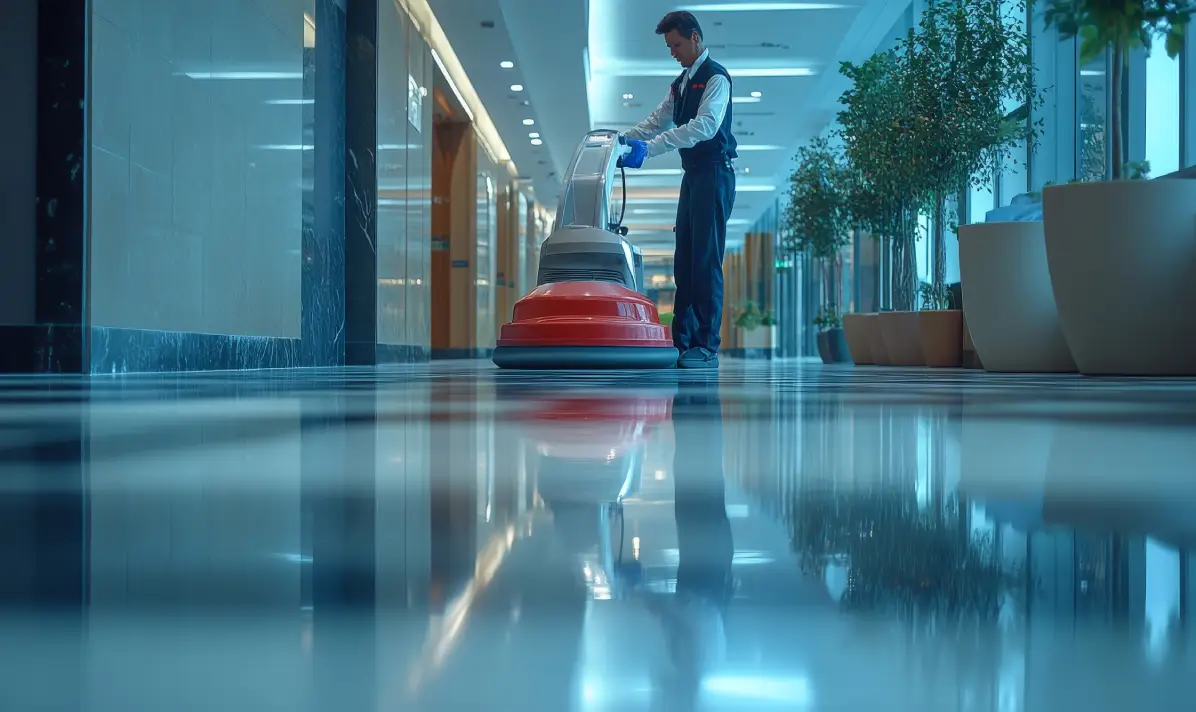
VCT is one of the most common surfaces covered under any commercial floor care Arizona maintenance program. It’s coated in a protective wax finish that wears down under foot traffic over time, taking on scuffs, dulling, and a gray, embedded look in high-traffic paths. Restoring it requires stripping the old wax down to bare tile, then rebuilding the finish in several thin coats, typically three to five, rather than one thick layer, which is what gives a freshly stripped floor its even, glossy look.
Between full strip-and-wax services, regular buffing (sometimes called burnishing) restores shine to the existing wax layer without removing it, which is a significantly cheaper way to keep a floor looking fresh between full restorations. Most commercial VCT floors need a complete strip and wax once or twice a year, but that number isn’t fixed:
- High-traffic corridors, entrances, and elevator lobbies often need buffing weekly or biweekly and a full strip-and-wax closer to twice a year.
- Lower-traffic office areas may only need buffing monthly and a full restoration once annually.
- Areas exposed to grit or sand (common near entrances in Arizona) wear down faster, since embedded grit acts almost like sandpaper under foot traffic.
✓ The Cost of Waiting
VCT floors need periodic stripping and waxing to maintain shine. Regular buffing between full services extends time between restorations and costs far less per visit.
Specialty Cleaning for Natural Stone and Terrazzo
Natural stone (marble, travertine, granite) and terrazzo are both alkaline-sensitive to acidic cleaners in different ways, which is another area where commercial floor care Arizona buildings need real technical knowledge: acidic products can etch polished marble and travertine, permanently dulling the surface in a way that ordinary buffing can’t fix. That’s why these floors need pH-neutral, stone-safe cleaning products rather than standard all-purpose cleaners, even though the visible dirt looks the same as it would on any other floor.
Beyond routine cleaning, natural stone and terrazzo both benefit from periodic polishing (sometimes preceded by honing on stone with visible scratching) to restore the reflective shine that makes these materials worth the premium cost in the first place. Porous stone types like travertine and limestone also need periodic resealing to prevent staining from spills soaking into the surface. This work happens far less often than routine cleaning, typically annually or every couple of years, but it requires real technical skill: an improperly honed or polished stone floor can end up with visible swirl marks or uneven sheen that’s harder to fix than the original problem.
✓ Pay Attention to This
Natural stone and terrazzo need pH-neutral, stone-safe cleaning products. Periodic polishing and resealing protect the surface and maintain its appearance long-term.
Concrete Floor Care for Industrial and Warehouse Properties
Polished and sealed concrete are common in warehouses and industrial spaces because they hold up well under forklift traffic and heavy equipment, but “durable” doesn’t mean “maintenance-free. Polished concrete relies on a densifier treatment that hardens the surface, and regular dust mopping with a neutral cleaner (never anything acidic) keeps grit from scratching that polished surface over time. Sealed concrete depends on its topical sealant staying intact, since that layer is what actually resists staining from oil, chemicals, and everyday grime.
Resealing on a schedule protects that surface before it wears through, and the right interval depends heavily on what the floor is exposed to:
- Standard warehouse traffic (foot and light cart traffic) may only need resealing every two to three years.
- Heavy forklift or equipment traffic wears sealant faster, often requiring resealing every one to two years.
- Chemical or oil exposure accelerates sealant breakdown regardless of traffic volume, and spot-resealing high-exposure areas between full applications can extend the life of the rest of the floor.
✓ Simpler Than You Think
Concrete floors need sealant-appropriate maintenance matched to traffic and chemical exposure. Resealing on schedule prevents staining and protects the polished surface.
 Carpet Care as Part of a Complete Floor Maintenance Program
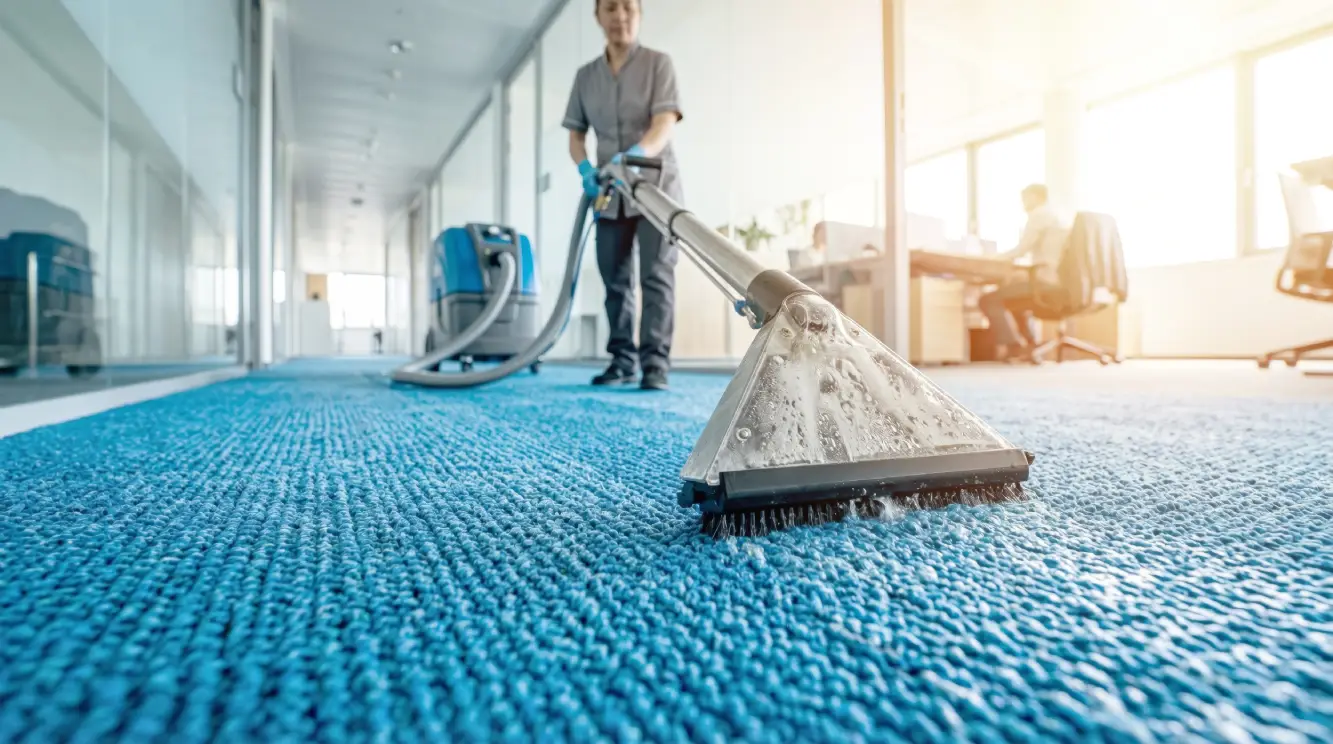
Commercial carpet needs a two-tier maintenance approach: frequent vacuuming to remove surface soil before it gets ground into the fibers, and periodic deep, professional cleaning (typically hot water extraction) to remove the soil that vacuuming alone can’t reach. Industry guidance generally recommends professional extraction cleaning every twelve to eighteen months for standard commercial traffic, more often in high-traffic lobbies and conference areas.
Spot treatment matters as much as scheduled cleaning. A spill or stain addressed the same day is far easier to fully remove than one that’s been walked over and dried for a week, which is why carpet care works best as an ongoing routine rather than a once-a-year event. In buildings with a mix of carpet and hard flooring, which describes most multi-tenant office and retail properties, carpet care needs to be coordinated with hard floor maintenance rather than scheduled independently, so that both get consistent attention instead of one falling behind the other.
✓ This Is the Detail That Matters
Carpet care combines frequent vacuuming with periodic professional extraction cleaning. Mixed-flooring buildings need both scheduled together, not treated as separate programs.
Seasonal Considerations for Arizona Commercial Floor Care
Arizona’s climate changes the maintenance math in ways that generic national guidance doesn’t account for. Dust and monsoon-driven debris (July through September, roughly) track more grit onto floors than a typical climate, and a large share of the dirt that ends up ground into a floor’s finish, industry estimates put it at a majority of total soil, comes in on foot traffic through entrances. That makes entrance matting one of the highest-value, lowest-cost tools available: a quality mat system captures grit before it reaches the rest of the floor, meaningfully slowing wear on whatever finish is installed past the entryway.
Monsoon humidity is a secondary factor worth watching, particularly for natural stone and certain sealed floors, since moisture can interact differently with these materials than Arizona’s typical dry conditions. Adjusting attention seasonally, more matting and entryway focus during dust and monsoon season, standard routines the rest of the year, protects flooring more effectively than a flat, unchanging schedule.
✓ The Upgrade That Pays Off
Arizona’s dust and monsoon season increase debris tracked onto floors. Entrance matting is a low-cost way to substantially reduce that wear.
Signs Your Flooring Needs Attention Sooner Than Scheduled
A few warning signs are worth acting on before the next scheduled service, rather than waiting, and catching them early is a core part of any commercial floor care Arizona program:
- Dulling appearance that doesn’t improve with routine cleaning, often a sign a full restoration is overdue.
- Visible wear patterns, especially in traffic lanes, which tend to accelerate once they start rather than staying stable.
- Everyday soiling that’s hard to remove, suggesting the protective finish (wax, sealant, or stone coating) has worn thin.
- Staining that wasn’t there before, particularly on stone or sealed concrete, which can indicate a compromised seal.
Catching these signs early and adjusting the schedule prevents the kind of deep, structural flooring damage that costs far more to fix than an earlier restoration service would have.
Coordinating Floor Care with Tenant Activities
Services requiring drying time or equipment access, stripping and waxing, stone polishing, carpet extraction, are disruptive if scheduled during business hours in an occupied building. Evening or weekend scheduling avoids that disruption entirely for most specialty services, and it’s worth confirming as a standard part of setting up any maintenance program rather than negotiating it after the fact.
A brief walkthrough immediately after a completed service, while the crew is still on-site, is also worth building into the process. Catching an uneven area or a missed spot before the crew leaves is far easier to fix than scheduling a separate return visit later.
Protecting Your Flooring Investment Long Term
Flooring replacement is a significant capital expense, and most property owners want to delay it as long as realistically possible. Consistent, material-appropriate commercial floor care Arizona property owners invest in is what actually extends that timeline: a VCT floor kept on a proper strip-and-wax cycle, a stone floor resealed on schedule, or a concrete floor resealed before its sealant fully breaks down will all outlast the same material maintained reactively, cleaned only when it starts looking bad. The cost difference between planned maintenance and early replacement is almost always in the maintenance column’s favor.
This is also where cross-trained staff matter more than it might seem. A maintenance program is only as consistent as the technician showing up, so a provider that trains staff across multiple flooring types, rather than assigning whoever’s available regardless of the floor’s specific needs, delivers more predictable results over time. Affiliated Building Maintenance cross-trains staff for exactly this reason, and every completed floor care visit includes a walkthrough to confirm the results meet expectations before the crew leaves.
Frequently Asked Questions
Most commercial VCT floors benefit from a full strip and wax once or twice annually, with regular buffing in between to maintain shine on the existing wax layer without removing it. High-traffic areas like entrances, corridors, and elevator lobbies often need buffing weekly or biweekly and a full restoration closer to twice a year, since embedded grit in these areas wears down the finish faster than in lower-traffic office space. Areas exposed to outdoor sand or dust, common near Arizona entrances, tend to need attention on the shorter end of that range regardless of foot traffic alone.
Yes. Natural stone and terrazzo require pH-neutral, stone-safe products, since standard or acidic cleaners can etch and permanently dull the surface in a way that ordinary buffing can’t fix afterward. This matters even when the visible dirt looks the same as it would on any other floor, since the damage from the wrong product often isn’t obvious until the shine is already gone. Porous stone types like travertine and limestone also need periodic resealing on top of routine cleaning to prevent staining from spills soaking into the surface.
It depends on traffic and exposure. Standard warehouse traffic may only need resealing every two to three years, while heavy forklift or equipment traffic wears sealant faster, often shortening that to every one to two years, and chemical or oil exposure accelerates sealant breakdown regardless of traffic volume. Spot-resealing high-exposure areas between full applications, rather than waiting for the whole floor to need it, can extend the life of the rest of the surface.
Dust and monsoon-season debris, roughly July through September, increase how much grit gets tracked onto floors compared to most other climates, and a large share of the dirt that ends up ground into a floor’s finish comes in on foot traffic through entrances. That makes entrance matting one of the highest-value, lowest-cost tools available, since capturing grit before it reaches the rest of the floor meaningfully slows wear on whatever finish is installed past the entryway. Monsoon humidity is a secondary factor worth watching too, particularly for natural stone and certain sealed floors that respond differently to moisture than Arizona’s typical dry conditions.
They should be coordinated, even though the specific tasks differ significantly, frequent vacuuming and periodic hot water extraction for carpet versus stripping, sealing, or polishing for hard surfaces. Most multi-tenant office and retail buildings have both, and treating them as one comprehensive program, documented together rather than as two separate contracts, keeps neither type quietly falling behind the other. This coordination also simplifies budgeting, since property managers get one combined schedule to plan around instead of tracking two independent timelines.
AFFILIATED BUILDING MAINTENANCE
Serving Arizona Properties Since 1996
Proper floor care matched to your specific flooring materials protects a significant property investment over time. Affiliated Building Maintenance brings nearly three decades of Arizona floor care expertise to every property we serve, with a tailored assessment as the starting point for any new account.